How to Choose the Best Motion Detection Camera for Your Needs?
Choosing the right Motion Detection Camera is crucial for effective surveillance. Experts like Dr. Emily Chen highlight the importance of understanding your unique needs. “Not all cameras provide the same quality or features,” she emphasizes. This statement reflects the growing complexity in the market.
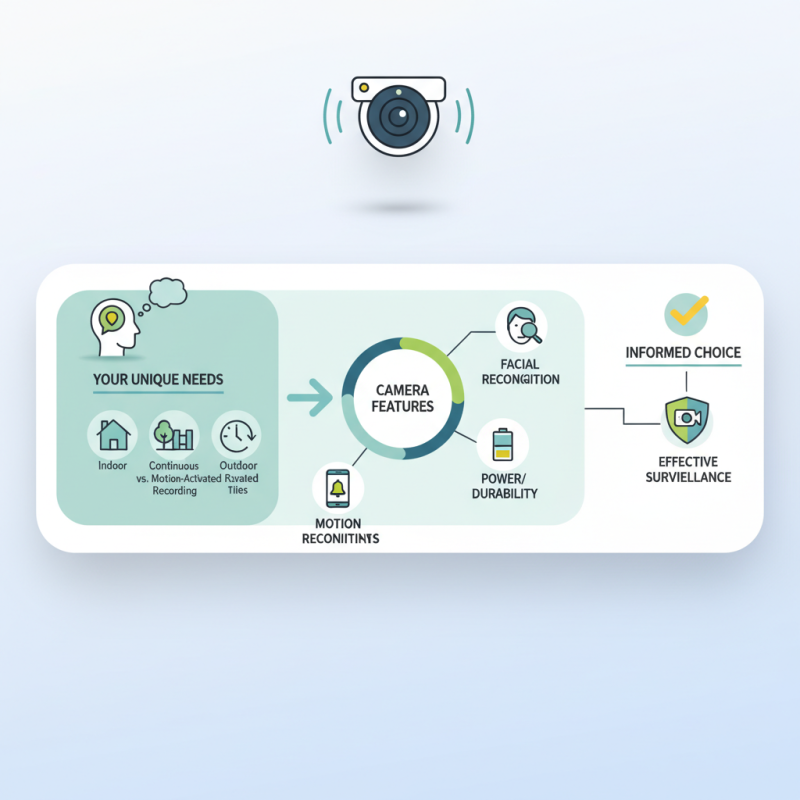
Motion Detection Cameras vary widely in specifications and functionality. Some offer advanced features like facial recognition, while others focus on simple motion alerts. Consider where you plan to place the camera. Indoor cameras often differ significantly from outdoor models. This choice impacts their durability and effectiveness.
Understanding features is key to making a wise decision. Many options exist, so it’s easy to feel overwhelmed. Reflect on how you aim to use the camera. Maybe you need a camera that records only when it detects motion. Or perhaps you want continuous recording. Identifying your specific needs allows for better choices.
Understanding Motion Detection Technology: Key Features and Mechanisms
Motion detection cameras use various technologies to identify movement in their environment. Commonly, they rely on passive infrared sensors, which detect heat changes. These cameras alert you when a warm object, like a person or animal, passes by. This feature is ideal for security or wildlife observation.
Another technology is video analytic software. It analyzes video feeds for specific motion patterns. This tool can distinguish between moving objects, like people or cars, and background activity. However, it can sometimes lead to false alarms. For example, a flying bird may trigger an alert. So, it’s crucial to assess the camera’s sensitivity settings.
When choosing a motion detection camera, consider viewing angles and resolution. Higher resolution offers clear images but may impact storage. You’ll also want to check the night vision capabilities. Cameras with infrared light can capture images in low light conditions. But some models may produce grainy footage, so reflection on quality is essential.
How to Choose the Best Motion Detection Camera for Your Needs?
| Feature |
Description |
Importance Level |
| Resolution |
Higher resolution will provide clearer images, useful for identifying details. |
High |
| Field of View |
A wider field of view allows coverage of more area with fewer cameras. |
Medium |
| Night Vision |
Allows cameras to capture video in low-light conditions. |
High |
| Motion Sensitivity |
Adjustable sensitivity settings can help reduce false alarms. |
High |
| Two-way Audio |
Enables communication through the camera, useful for interactive monitoring. |
Medium |
| Cloud Storage |
Offers backup for footage in case of device failure. |
Medium |
| Integration with Other Systems |
Ability to connect with smart home devices and security systems. |
High |
| Price |
Consider your budget while ensuring you get the necessary features. |
High |
Types of Motion Detection Cameras: Wired vs. Wireless Options
When selecting a motion detection camera, understanding the differences between wired and wireless options is crucial. Wired cameras typically offer more stability and continuous power. According to recent industry surveys, wired systems account for approximately 60% of installations in professional settings, where reliability is paramount. These cameras can transmit high-quality video without lag, making them ideal for crucial surveillance areas.
On the other hand, wireless cameras provide flexibility and easier installation. A report from a leading security research firm indicates that 40% of consumers prefer wireless systems for their ease of use. They can be placed in hard-to-reach areas. However, they may suffer from connectivity issues or battery life constraints. Homeowners should evaluate their specific needs, as wireless options sometimes lack the uninterrupted performance of wired systems.
Beyond just connection type, it’s essential to assess image quality, range, and detection sensitivity. Some users report false alarms with wireless cameras due to environmental factors. It’s worth noting that even advanced models are not foolproof. Users often express frustration over inconsistent performance. Understanding your environment and adjusting settings is key to maximizing effectiveness. Consider which option aligns with your unique requirements, while being mindful of limitations.
Analyzing Resolution and Image Quality: Importance of Megapixels
When choosing a motion detection camera, resolution and image quality are crucial. Megapixels play a significant role. Higher megapixel counts typically mean better details in images. According to a report by CNET, a camera with at least 1080p resolution (approximately 2 megapixels) is often sufficient for most home security needs. However, for more precise identification, a resolution of 4MP or higher is recommended.
It's essential to understand that more megapixels do not always equate to better quality. Image sensor size, lens quality, and lighting conditions also matter. A 12MP camera can yield blurry images in low light if the sensor is small. Conversely, a 2MP camera with a larger sensor may perform surprisingly well at night. This highlights the need for a balanced view when selecting a camera.
Additionally, real-world testing often reveals that surveillance cameras can struggle with motion blur. Cameras with higher frame rates reduce this issue but can increase storage needs. The complexity of finding the right camera is evident. It emphasizes the importance of conducting thorough research and considering specific use cases before making a purchase.
Analyzing Motion Detection Camera Image Quality: Resolution and Megapixels
Evaluating Storage Solutions: Cloud vs. Local Storage Capacities
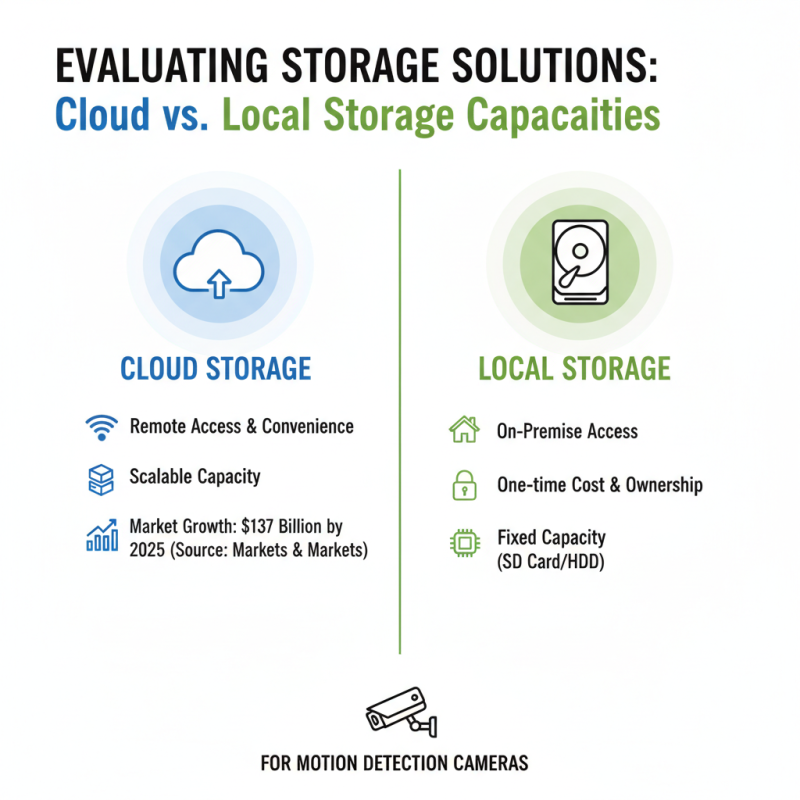
When selecting a motion detection camera, storage options play a crucial role. The choice between cloud and local storage can significantly impact your experience. Cloud storage is convenient. It offers remote access and is scalable. According to a report by Markets and Markets, the global cloud storage market is expected to reach $137 billion by 2025. This growth shows a rising preference for cloud solutions among users.
Local storage has its benefits too. It provides direct control over your data. Users can avoid issues like data breaches that sometimes occur with cloud systems. However, local storage setups can be limited. They often require physical devices that can fail. A study by Statista revealed that nearly 30% of users have experienced data loss due to hardware failure. This highlights the need for a solid backup plan.
Choosing the right solution depends on usage and priorities. If you need flexibility and remote access, cloud storage may be the edge. Conversely, if control and security are paramount, local storage is worth considering. The key is to reflect on how often you will access footage. Think about the limitations of each option. Review what matters most for your peace of mind.
Security Needs Assessment: Customizing Camera Selection for Specific Use Cases
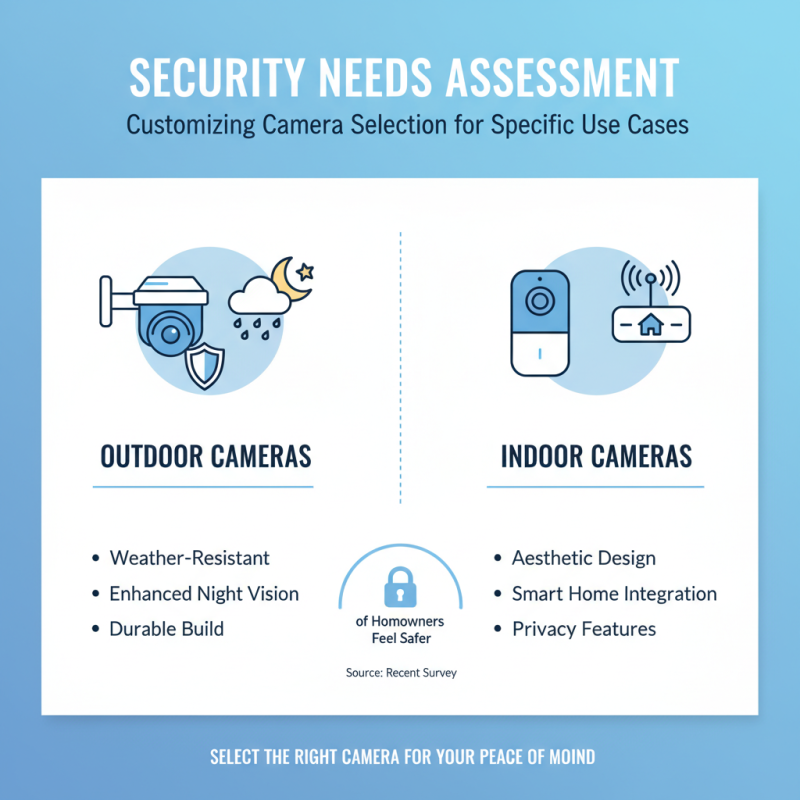
When selecting a motion detection camera, understanding your specific security needs is crucial. A recent survey found that 70% of homeowners feel safer with security cameras. However, not all cameras fit every scenario. For instance, outdoor cameras require better weather resistance and night vision capabilities. In contrast, indoor cameras may prioritize design and integration with home automation.
Consider the specific use cases. A business, for example, may require cameras that can monitor large areas and offer advanced features like person detection or facial recognition. According to industry reports, some businesses reported a 50% reduction in theft after installing motion detection cameras. Yet, choosing a high-resolution camera can lead to storage issues. Balancing quality and space is key.
Moreover, privacy concerns cannot be overlooked. There’s a growing demand for cameras with transparent privacy settings. Consumers want to ensure their data is safe. Yet, only 30% of users fully understand their camera's privacy settings. This gap can lead to misunderstandings and misuse. It’s vital for users to educate themselves about the features and potential risks of their chosen devices.