How to Choose the Best Mini Camera for Your Needs?
Choosing the right Mini Camera is crucial for capturing life's moments. With so many options available, making the right choice can be overwhelming. Mini cameras come in various shapes, sizes, and features. Your decision should align with your needs and lifestyle.
When selecting a Mini Camera, consider its portability. Many models are lightweight and easy to carry. Think about image quality, as high-resolution images enhance your photography experience. Battery life also matters, particularly for outings or travels.
Understanding your requirements is key. Some cameras prioritize compactness over functionality. Others may offer great features but sacrifice convenience. Reflect on what you really need. Balancing these factors will ultimately lead you to the Mini Camera that best suits your needs.
Understanding Your Photography Needs and Goals
When selecting a mini camera, it's vital to understand your photography needs and goals. Are you capturing family events, travel adventures, or creative projects? Each purpose requires different features. A compact camera may suit casual photos, while a high-resolution option is better for detailed work.
Tips: Consider the camera's weight. If you plan to carry it everywhere, a lightweight model is essential. Also, look at battery life. A short battery duration can limit your photography opportunities.
You might face challenges figuring out what you really need. Sometimes, features that seem essential turn out to be unnecessary. Reflect on your past experiences with cameras. Did you often switch modes? Seek a model with user-friendly controls. This can enhance your shooting experience.
Tips: Don't overlook the importance of image stabilization. It can dramatically improve picture quality. Test cameras in-store if possible. Handling a camera can reveal much about its usability.
How to Choose the Best Mini Camera for Your Needs?
| Feature |
Description |
Best For |
| Image Quality |
Resolution, low-light performance, and lens quality. |
Travel and Outdoor Photography |
| Size & Portability |
Compact design that fits in a pocket or small bag. |
Casual & Street Photography |
| Battery Life |
Can typically take 200-300 shots or more. |
Long Day Trips |
| Video Capabilities |
Supports HD or 4K video recording. |
Vlogging & Documentaries |
| Durability |
Waterproof or shockproof features for rough use. |
Adventure & Sports Photography |
Key Features to Consider in a Mini Camera
When choosing a mini camera, the key features to consider will shape your experience. Start with image quality. Cameras should have at least 10 megapixels for decent photos. Look for models that support high-definition video recordings. Many users appreciate the flexibility of adjustable resolutions. Next, consider battery life. A camera that can last through an outing without frequent recharging is ideal. Some mini cameras offer up to four hours of battery life, which can be quite limiting.
Portability is another crucial aspect. Your mini camera should be lightweight and compact, fitting comfortably in your pocket or bag. Evaluate the design for user-friendliness too. Intuitive controls will enhance your overall shooting experience. Pay attention to connectivity features as well. Wi-Fi and Bluetooth options can make transferring files easier. You may want a camera that allows instant sharing to social media.
Durability should not be overlooked. Some mini cameras are water-resistant or shockproof. If you plan to shoot outdoors, this feature is essential. But remember, mini cameras can have limitations. The small size may reduce ergonomics and navigation ease. Consider what matters most to you in a camera. Are you prioritizing size or function? Reflect on your needs before making a decision.
Comparing Different Mini Camera Types and Technologies
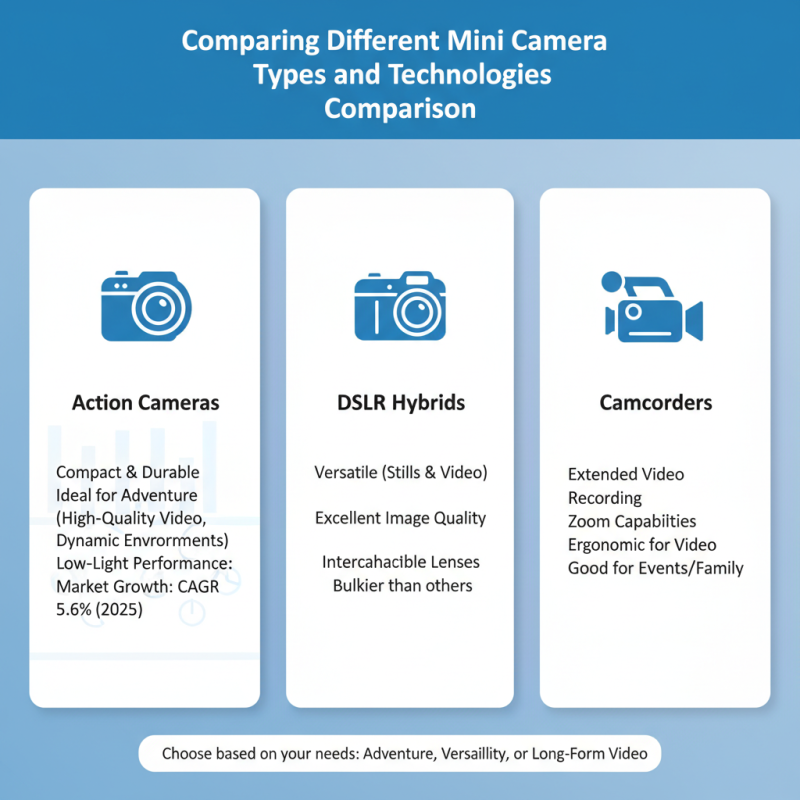
When selecting a mini camera, understanding the types and technologies available is crucial. Mini cameras, such as action cameras, DSLR hybrids, and camcorders, all serve different purposes. According to recent market research, action cameras are projected to grow at a CAGR of 5.6% through 2025. Their compact size and durability make them ideal for adventure enthusiasts. They excel in recording high-quality videos in dynamic environments, but their performance in low light often lacks.
On the other hand, DSLR hybrids provide enhanced image quality and settings flexibility. They appeal to semi-professionals who prioritize high resolution and creative control. However, they may be bulkier than traditional mini options. Reports indicate that while these hybrids account for 35% of the mini camera market, many users find their complexities daunting. The learning curve involves mastering various settings, which can lead to user frustration.
Smart cameras, featuring built-in AI technology, are on the rise. They automatically adjust settings based on conditions. This makes them user-friendly but may sacrifice some creative control. Industry data shows that 40% of first-time users prefer smart cameras for their ease of use. Choosing the right type involves balancing personal needs with technical capabilities to achieve the best results. Each option has strengths and weaknesses, emphasizing the importance of thoughtful consideration before purchase.
Budgeting for Your Mini Camera Purchase
When budgeting for a mini camera purchase, it’s essential to evaluate your specific needs.
Determine what features are most important to you. Do you need high-resolution images or advanced video capabilities?
Understanding your priorities helps narrow down options.
Consider not only the camera's price but also additional costs. Accessories like tripods, extra batteries, and cases can add up quickly.
Set aside a portion of your budget for these extras. It’s wise to research potential long-term expenses.
Sometimes, cheaper models may incur more costs over time due to repairs or lack of features.
Don’t forget to leave some room for unexpected finds.
Sales or discounts may appear when you least expect them.
However, avoid the temptation to overspend on unnecessary features.
Reflect on your actual needs versus wants.
A well-defined budget will guide you in making a sustainable choice.
Reading Reviews and Gathering User Feedback for Informed Choice
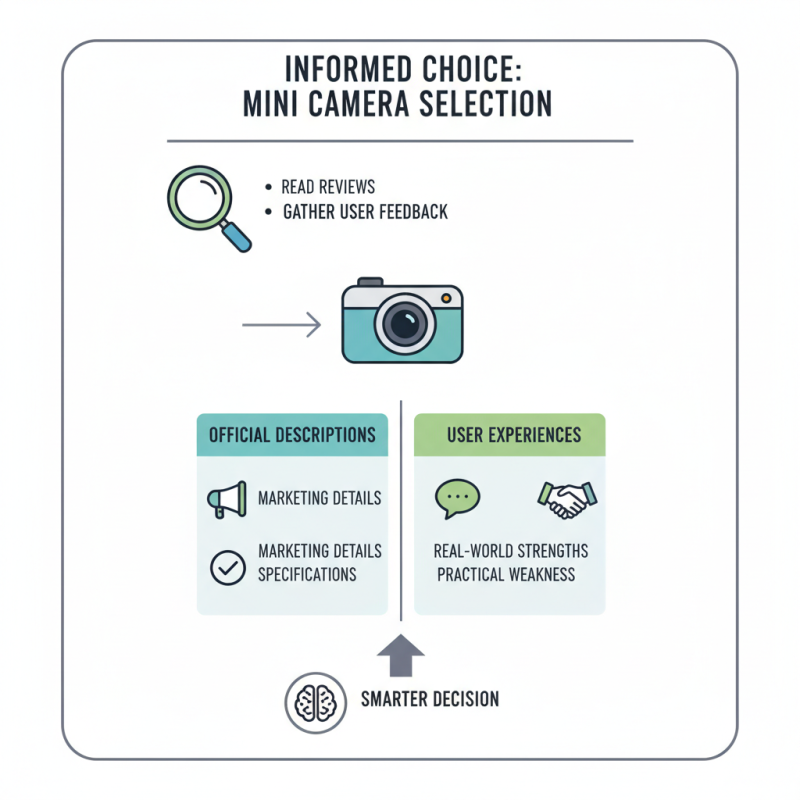
When selecting a mini camera, reading reviews is crucial. User feedback provides insights that official descriptions may overlook. Genuine experiences often reveal strengths and weaknesses in real-world situations.
Look for user comments on features like battery life and image quality. Users may highlight specific scenarios where a camera excels or fails. For instance, low-light performance can vary greatly, impacting your photography experience. Always consider both positive and negative reviews. A balance of perspectives gives a clearer picture of a camera's reliability.
Gather feedback from multiple sources. Explore forums, social media, and review websites. Each platform offers unique insights. Be wary of biases; some reviews may be overly positive or critical. Approach the information with a discerning eye. Informed choices come from thorough research and understanding of user experiences.