How to Choose the Best Mini Camera for Your Needs?
Choosing the right mini camera can be challenging. With countless options available, understanding your needs is essential. Mini cameras are compact yet powerful tools for capturing moments. They serve different purposes, from casual photography to professional use.
When selecting a mini camera, consider your intended use. Are you documenting travels, vlogging, or capturing family events? Each purpose may require different features. Pay attention to image quality, battery life, and ease of use. These factors can significantly impact your experience.
It's also important to reflect on budget constraints. Quality mini cameras can range widely in price. While it’s easy to be swayed by flashy features, consider what truly matters. In the end, the best mini camera meets your needs without unnecessary complexity. Balancing functionality and simplicity will lead you to a more satisfying choice.
Understanding Your Camera Needs and Purpose
When choosing a mini camera, understanding your needs and purpose is crucial. Are you capturing travel memories or documenting family events? Knowing the primary use helps narrow your options. For outdoor photography, look for models with durability. For indoor shots, consider cameras with low-light capabilities.
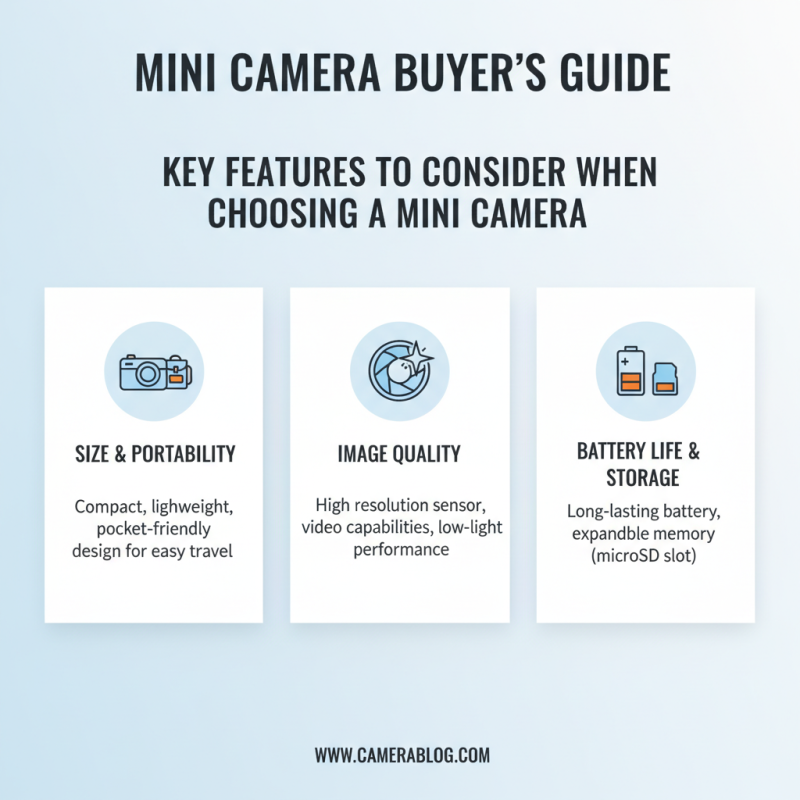
Tips: Focus on weight and size. A lightweight camera is easier to carry. Ensure it fits securely in your bag or pocket. Evaluate the battery life as well. Long-lasting batteries can prevent missed moments during outings.
Think about features that matter to you. Do you need Wi-Fi connectivity? This allows easy sharing of images. Check the resolution, too. Higher resolution provides clearer images but may require more storage space. Balance your needs with your budget. Not every high-priced camera guarantees satisfaction. Reflect on what features you will actually use. Many find themselves with unused functions. Go for what truly fits your lifestyle.
Mini Camera Features Comparison
This chart compares various features of mini cameras based on their scores from 1 to 10. Features evaluated include Image Quality, Portability, Battery Life, Video Quality, and Price. Assessing these features can help you choose the best mini camera that aligns with your specific needs and purpose.
Types of Mini Cameras Available on the Market
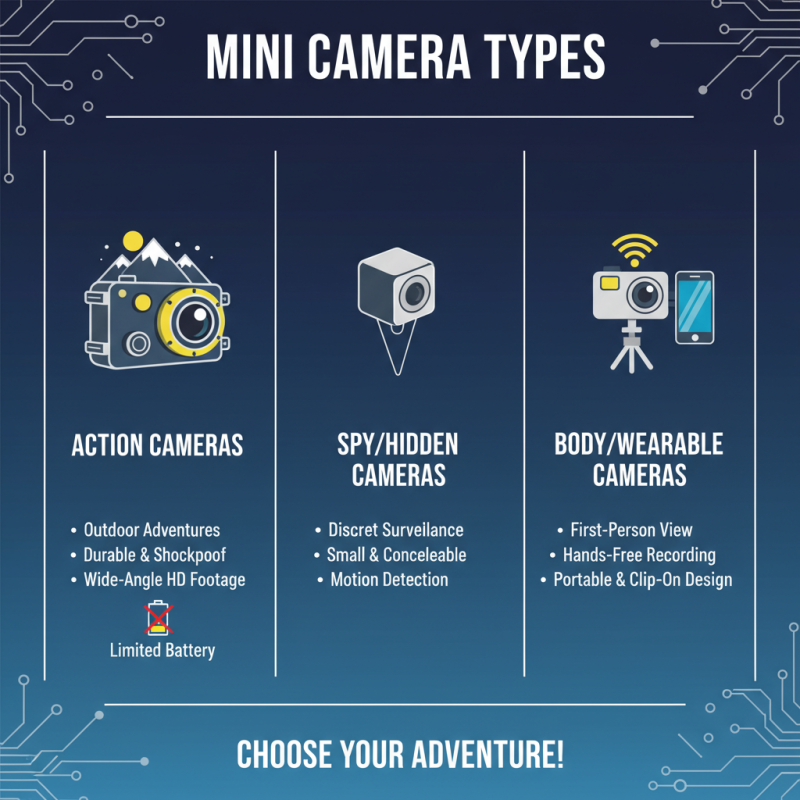
When choosing a mini camera, understanding the types available is essential. Various models cater to different needs. For outdoor adventures, action cameras are durable and shockproof. They capture high-definition footage, even in challenging conditions. Their wide-angle lenses provide immersive views. However, their battery life can limit extended use.
For everyday photography, compact cameras are ideal. They offer versatility without being bulky. Many come with features like zoom lenses and manual controls. Yet, they may lack advanced settings found in larger cameras. Users might find themselves frustrated by these limitations when trying to capture specific moments.
Lastly, hidden or spy cameras serve unique purposes. They can blend into environments, capturing discreet footage. These cameras raise privacy concerns, which need careful consideration. While they may provide valuable security insights, ethical implications should be addressed. Choosing a mini camera is about weighing these factors against personal preferences and intended use.
Budgeting and Price Comparison for Mini Cameras
When selecting a mini camera, budgeting plays a critical role. Market data shows that mini cameras have an average price range of $50 to $300. On a tight budget, options around $80 provide decent image quality and features. However, these cameras often lack advanced functionalities. Understanding your budget is essential for finding a balance between affordability and quality.
Research indicates that about 70% of users prioritize features over price when selecting a mini camera. High-resolution capabilities and video stabilization are often sought after. In this race for features, many may overlook their actual needs. A camera that offers 1080p video might suffice for casual users, yet some may splurge on unnecessary 4K capabilities. Prices for high-end models can exceed $500, which could be wasteful for individuals who will use their camera infrequently.
When comparing prices, consider used or refurbished models. These options can provide significant savings, often 30% lower than retail prices. However, buying used comes with risks. Inspect any used camera thoroughly before purchasing. Not all sellers are reputable. Gathering information from verified reviews from technicians can help mitigate risks. While the temptation to get the latest model is strong, be mindful of your actual usage to avoid overspending.
User Reviews and Recommendations for Best Mini Cameras
When searching for the best mini camera, user reviews provide valuable insights. Many enthusiasts emphasize the importance of size and weight. A compact design can enhance portability. Users often mention how a lighter camera doesn’t strain their hands during long shoots. This factor can be crucial for travel photography or events.
Feedback often highlights features like battery life and picture quality. Some users express disappointment with cameras that drain power quickly. Others report struggles with low-light performance. Reviewing these details can guide potential buyers. It’s also common to find discussions around user-friendly interfaces versus more complex settings. Many prefer simplicity, but some photographers see the value in advanced options.
Overall, user opinions can reveal hidden gems and common pitfalls. Some reviews caution against flashy extras that don’t deliver. Authentic experiences can guide you toward a mini camera that truly fits your needs. It's wise to weigh these voices against your personal preferences and intended use.
How to Choose the Best Mini Camera for Your Needs? - User Reviews and Recommendations for Best Mini Cameras
| Camera Model |
Resolution |
Battery Life |
Weight |
Price Range |
| Mini Camera A |
12 MP |
4 hours |
150 g |
$100 - $150 |
| Mini Camera B |
16 MP |
3 hours |
200 g |
$150 - $200 |
| Mini Camera C |
10 MP |
5 hours |
120 g |
$80 - $120 |
| Mini Camera D |
14 MP |
6 hours |
180 g |
$90 - $130 |
| Mini Camera E |
18 MP |
2.5 hours |
210 g |
$200 - $250 |