request to quote
Leave Your Message

Why Choose a Mini Camera for Global Sourcing?

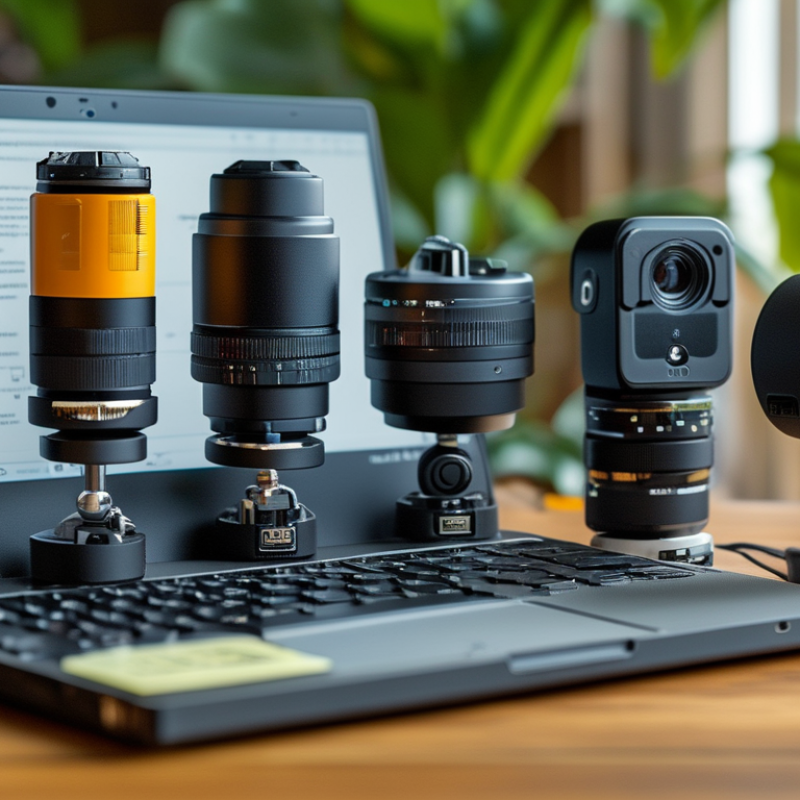
Choosing a Mini Camera for global sourcing can simplify product development, inspection, and portable visual documentation. Buyers often value its compact body, low power use, and flexible installation options. A device that fits beside a notebook can still support clear images, motion detection, or remote monitoring. However, size alone does not prove quality. Lens performance, sensor resolution, battery stability, and software reliability require careful testing.

Experienced sourcing teams usually request samples before placing larger orders. They compare image clarity in daylight, dim rooms, and changing outdoor conditions. They also check charging time, storage options, connection stability, and heat after several hours. A supplier should provide accurate specifications, test reports, warranty terms, and traceable production information. Certifications may vary by destination market, so buyers should verify applicable requirements with qualified professionals. Privacy features matter too. Secure passwords, encrypted connections, and clear user controls help reduce avoidable risks.

Small details often reveal supplier maturity.

For example, a sample may arrive with polished packaging but weak instructions. That gap deserves attention. Some factories communicate quickly, yet struggle with consistent quality between batches. Others offer fewer features but maintain stronger inspection records. Neither assumption is always correct. A practical evaluation should include factory audits, pre-shipment checks, and documented acceptance criteria. Buyers should also confirm whether firmware updates remain available after purchase. Global sourcing is rarely perfect, and unexpected delays can occur. Still, transparent communication and realistic testing create a more dependable decision. The right Mini Camera is not merely the smallest option. It is the model that matches the use case, market requirements, budget, and long-term support expectations.
Why Choose a Mini Camera for Global Sourcing?

Define Mini Cameras: 4K UHD Delivers 3,840 × 2,160 Pixels (CTA)

A mini camera is defined by its compact form, not by a single global size standard.

For buyers, the more useful question is image output. The International Telecommunication Union’s BT.2020 recommendation identifies UHD-1 as 3,840 × 2,160 pixels. That equals 8,294,400 pixels per frame. Small body, serious detail.

In global sourcing, 4K UHD can reveal fine evidence during product checks. Stitching gaps, surface scratches, barcode edges, and connector shapes become easier to inspect. The Consumer Technology Association treats 4K UHD as a key consumer video specification, while professional imaging reports increasingly evaluate resolution with low-light performance, lens quality, and compression. Resolution alone can mislead. A tiny sensor may produce sharp images outdoors but lose detail under warehouse lighting.

Ask for measured samples, not only specification sheets.

Request a 4K recording showing a moving carton, a metal label, and a dim storage aisle. Check whether the file remains 3,840 × 2,160 after export. Also review heat, battery duration, microphone clarity, and storage compatibility. A 4K file can exceed 300 MB per minute, depending on codec and bitrate. That affects cloud transfer and inspection costs. Compact hardware also creates compromises. Smaller batteries may limit continuous recording, and narrow lenses can miss nearby objects. Still, a well-tested mini camera can support clearer supplier audits, inventory checks, and remote quality discussions across markets.
Benchmark Imaging: 30 fps, 120° FOV, CMOS Size, and SNR

A mini camera can simplify global sourcing, but its value depends on measurable imaging performance. Grand View Research valued the global image sensor market at about USD 26.3 billion in 2023. Its report also forecasts an 8.7% compound annual growth rate through 2030. This growth increases supplier choice, but specifications still need careful verification.

For moving subjects, 30 fps offers a practical baseline. It can capture a hand crossing a counter with fewer visible gaps. However, 30 fps is not a magic number. Low light, compression, and slow exposure can still create blur. A 120° field of view covers a wide workspace, yet it may stretch faces and bend straight shelves near the edges. The wider view needs distortion testing, not just a catalog figure.

CMOS size affects light collection, module thickness, and cost. A larger sensor often supports cleaner images, but it may defeat the purpose of a compact camera. Signal-to-noise ratio should be checked under defined lighting conditions. The EMVA 1288 standard provides recognized methods for measuring noise, sensitivity, and dynamic range. MarketsandMarkets projects the machine vision market to grow from roughly USD 12.2 billion in 2023 to USD 17.2 billion by 2028. That growth makes benchmark-based sourcing more important. In practice, request raw test images at 30 fps, a 120° view, and low illumination. The overlooked detail is often the most expensive.

Compare Interfaces: USB 2.0 Offers 480 Mbps; Wi-Fi 6, 9.6 Gbps

Why Choose a Mini Camera for Global Sourcing?

A mini camera’s interface can shape its real sourcing value. The USB 2.0 specification defines a maximum rate of 480 Mbps. That sounds sufficient for basic video transfers. However, actual performance drops with cables, storage limits, and device processing. A 4K clip may still transfer slowly during factory inspections. USB also needs a physical connection, which can limit placement inside compact equipment.

Wi-Fi 6 supports a theoretical maximum of 9.6 Gbps, according to the IEEE 802.11ax specification and Wi-Fi Alliance technical data. Its higher capacity suits live previews, remote monitoring, and several connected devices. Yet, Wi-Fi 6 does not guarantee 9.6 Gbps in a warehouse. Walls, interference, distance, and router capacity matter. Reality is messier. A wired USB connection can remain more stable in crowded facilities. This trade-off deserves attention during global sourcing.

Tips: Ask suppliers for measured throughput, not headline speed. Request tests with the final cable length, lighting, and storage setup. Confirm whether the camera supports local recording when wireless signals fail. Check regional frequency requirements, encryption settings, and firmware update procedures. I would also compare a five-minute video transfer, not just a specification sheet. That small test often reveals overlooked delays.

Why Choose a Mini Camera for Global Sourcing? – Compare Interfaces: USB 2.0 Offers 480 Mbps; Wi-Fi 6, 9.6 Gbps

Evaluation Dimension USB 2.0 Interface Wi-Fi 6 Interface Sourcing Implication for Mini Cameras
Theoretical maximum link speed 480 Mbps Up to 9.6 Gbps Wi-Fi 6 provides substantially higher theoretical bandwidth, but actual throughput depends on network conditions, device design, and distance.
Connection method Wired connection through a USB cable Wireless connection through a compatible Wi-Fi 6 network USB is useful for direct setup and data transfer; Wi-Fi 6 supports cable-free placement and remote access.
Power requirement Can carry power and data through one cable, depending on the camera design Requires a separate power source or rechargeable battery USB can simplify continuous operation, while Wi-Fi 6 mini cameras need careful battery and charging evaluation.
Typical deployment range Limited by cable length and installation layout Limited by wireless coverage, obstacles, interference, and network configuration Choose USB for fixed, nearby installations and Wi-Fi 6 for flexible placement across suitable indoor networks.
Latency consistency Generally stable when the cable and host connection are reliable Can be low, but may vary with congestion, signal strength, and network traffic A wired interface is often easier to control for predictable monitoring; wireless requires network testing before volume orders.
Installation flexibility Moderate; cable routing is required High; fewer data cables are needed Mini cameras with Wi-Fi 6 are well suited to temporary installations, compact spaces, and locations where cabling is difficult.
Network dependency Low for direct camera-to-host use Requires compatible wireless infrastructure and secure network configuration For global sourcing, confirm regional network compatibility, authentication support, and local regulatory requirements.
Security considerations Physical access to the cable and connected host should be controlled Requires strong wireless encryption, secure passwords, firmware support, and access controls Request documented security features and update policies before selecting a connected mini camera.
Best-fit use cases Desktop monitoring, development, testing, and fixed installations Remote monitoring, flexible placement, smart-home integration, and multi-camera wireless deployments The right interface depends on whether the priority is stable wired operation or flexible networked deployment.
Recommended sourcing checks Confirm connector type, cable length, operating-system support, power delivery, and sustained transfer performance. Confirm Wi-Fi 6 compatibility, supported frequency bands, encryption options, antenna performance, firmware updates, and real-world throughput. Request samples and test video stability, image quality, heat generation, connection recovery, and long-duration operation before placing a large order.

Note: The stated speeds are theoretical maximum link rates defined for the interfaces. Usable data rates are typically lower because of protocol overhead, hardware limitations, signal conditions, network traffic, and the camera’s internal processing capacity.

Verify Compliance: CE, FCC, RoHS, and IP67 Under IEC 60529

Why Choose a Mini Camera for Global Sourcing?

A mini camera may look identical across suppliers, but compliance evidence can differ sharply. CE marking shows conformity with applicable European requirements, not automatic product approval. Ask for the EU Declaration of Conformity, technical file references, and laboratory test reports. For the United States, FCC authorization addresses radio-frequency emissions and electromagnetic compatibility. A missing FCC identifier or test record deserves attention.

RoHS compliance restricts ten hazardous substances, including lead, mercury, and certain phthalates. Request material declarations, supplier controls, and recent test results. The European Commission’s 2023 Safety Gate report recorded 3,412 product safety alerts, showing why paperwork alone cannot replace verification.

Shortcuts fail. Under IEC 60529, IP67 means dust-tight protection and temporary immersion up to one metre for 30 minutes. It does not guarantee resistance to saltwater, pressure washing, or damaged seals. I would treat the rating as a tested condition, not a permanent promise.

Check samples after charging, vibration, cable bending, and enclosure opening. One overlooked gasket can undermine a convincing report. Reliable sourcing combines documents, physical inspection, and traceable testing before shipment.

Assess Sustainability: 62 Mt E-Waste, 22.3% Recycled (UNITAR 2024)

Why Choose a Mini Camera for Global Sourcing?

Global sourcing teams are looking beyond image quality and purchase price. They are also measuring environmental impact. UNITAR’s 2024 assessment reports 62 million tonnes of electronic waste worldwide, while only 22.3% was recycled. These figures make product size important, but not decisive.

A mini camera can use fewer materials, require smaller packaging, and reduce shipping volume. Its compact design may also support longer use in inspection, education, security, or field documentation. However, “small” does not automatically mean sustainable. A fragile battery, sealed casing, or unavailable replacement part can shorten the product’s useful life. That weakness deserves honest attention.

Tips:

Ask suppliers for material details, battery specifications, repair options, and recycling guidance. Check whether packaging uses excessive plastic or empty space. Request samples before placing large orders. Test image stability, heat performance, charging cycles, and software support. Keep written records of supplier claims and verification results. Independent testing is more reliable than attractive marketing language.

Sourcing teams should assess the whole product journey. Manufacturing, transport, daily electricity use, maintenance, and end-of-life handling all matter. A compact camera may reduce waste, but poor quality can create faster replacement. That is the uncomfortable part. Choose durability over novelty, and compare lifecycle evidence before selecting a supplier.