Choosing the right Surveillance Camera in 2026 is no longer a simple matter of comparing resolution. Buyers must assess lighting, coverage, storage, cybersecurity, maintenance, and privacy requirements. A camera that performs well in a bright warehouse may fail beside a rainy driveway at midnight.
According to MarketsandMarkets’ Video Surveillance Market report, the global market could grow from approximately USD 53.7 billion in 2024 to USD 83.3 billion by 2029. Grand View Research also identifies artificial intelligence, cloud platforms, and networked cameras as major growth drivers. These figures suggest a rapidly expanding market, but growth can create confusion. More features do not always mean better protection.
There is no universal winner.
Fredrik Nilsson, Vice President of the Americas at Axis Communications, has stated, “The camera is the most important part of a video surveillance system.” His point remains practical. A sharp image, stable connection, and suitable field of view determine whether recorded footage is genuinely useful.
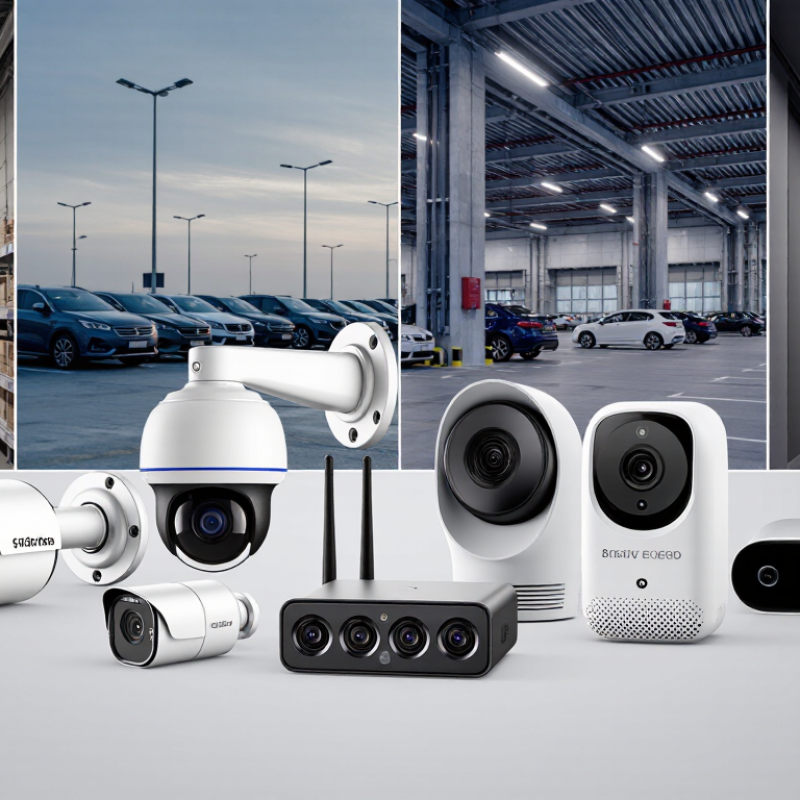
This guide compares fixed dome, bullet, PTZ, thermal, multisensor, wireless, and AI-enabled camera types. It considers real locations, including narrow shop aisles, open parking areas, factory entrances, and poorly lit corridors. Cost matters too. So does installation complexity.
Some recommendations may need reconsideration as technology changes. AI detection can reduce false alerts, yet it may still misread shadows, reflections, or crowded scenes. Cloud storage offers convenience, but bandwidth and recurring fees deserve careful review. The best choice depends on the site, not the advertising label.
Surveillance cameras in 2026 are divided by coverage, movement, installation, and processing method. Grand View Research’s 2024 Video Surveillance Market report forecasts roughly 9% annual growth through 2030. The demand is practical: clearer evidence, faster alerts, and fewer blind spots.
Fixed dome cameras suit indoor corridors, offices, and retail ceilings. Their compact shape protects the lens from casual tampering. Bullet cameras provide longer views across driveways, loading areas, and perimeter fences. Pan-tilt-zoom cameras cover wide spaces, but they can miss events while turning.
Multi-sensor cameras reduce this weakness by combining several viewing angles in one housing. Thermal cameras detect heat rather than visible light. They are useful in darkness, smoke, or harsh weather, although image detail can disappoint. Wireless and solar-powered cameras simplify remote installation, but battery performance changes sharply in winter.
Network cameras now dominate many new projects, while analog systems remain practical for some upgrades. MarketsandMarkets’ 2024 report expects the video surveillance market to expand at a double-digit compound annual growth rate during its forecast period. Edge-based cameras can analyze movement locally, reducing bandwidth use and response delays. Yet analytics are not magic. Rain, insects, reflections, and crowded scenes still create false alerts. A camera with impressive specifications may perform poorly when glare hits the lens at 4 p.m. Choosing the best type requires testing night images, storage costs, viewing distance, privacy controls, and maintenance access on the actual site.
Surveillance cameras convert light, heat, or movement into usable evidence. Network cameras capture digital images and send them through wired Ethernet or wireless connections. Power over Ethernet can carry electricity and video through one cable, simplifying installation. Image quality still depends on lighting, lens choice, compression, and network stability.
Infrared cameras use invisible infrared light for dark scenes. They often show monochrome images at night, but reflective surfaces can create bright patches. Thermal cameras detect heat instead of visible light. They can reveal people through smoke or darkness, although they usually provide less facial detail.
Pan-tilt-zoom cameras use motors to change direction and magnification. They cover large areas, but a moving lens cannot watch every angle simultaneously.
Some systems analyze video locally or on a secure server. Motion detection compares changing pixels, while more advanced analytics classify people, vehicles, or unusual movement. These tools can reduce false alerts, but rain, shadows, and crowded scenes still confuse them. During a site assessment, I would test cameras at dawn, midday, and night. A daytime image can look excellent and fail after sunset. Placement matters more than advertised resolution. Mounting a camera too high may protect it from damage, yet it can hide useful facial details. I would also review retention settings, access controls, and audit logs, because reliable monitoring depends on both hardware and disciplined operation.
2026 Top Surveillance Camera Types: Which One Is Best?
The best surveillance camera depends on the monitoring environment, not on a fashionable feature list. For a bright retail entrance, a high-resolution dome camera with wide dynamic range can preserve faces near glass doors. Light changes everything. In a dark warehouse, infrared cameras and low-light sensors are more practical. Thermal cameras can detect heat signatures across large outdoor areas, but they usually cannot provide detailed facial identification. Grand View Research estimates that the global video surveillance market could reach about 117 billion US dollars by 2030, with analytics and networked systems driving much of this growth.
Weather and distance also change the decision. An outdoor loading area needs strong weather protection, stable night performance, and vibration resistance. A narrow corridor may benefit from a compact turret camera with focused coverage. For long fences, pan-tilt-zoom models can follow movement, although they may miss activity outside their current viewing angle. The 2024 MarketsandMarkets report identifies video analytics as a major growth area, yet analytics still depend on camera placement, lighting, and image quality.
In real installations, storage and network capacity are often underestimated. A four-camera system recording continuously can create substantial data, especially at high resolution. I have seen excellent cameras perform poorly because glare and poor mounting were ignored. No checklist is perfect. Test the camera at night, during rain, and when people approach from different angles. The right choice is the one that produces usable evidence in that specific environment, while respecting applicable privacy requirements.
| Camera Type | Best Monitoring Environment | Main Strengths | Key Limitations | Typical Coverage | Low-Light Performance | Weather and Vandal Resistance | Installation Considerations | Best Use Case |
|---|---|---|---|---|---|---|---|---|
| Dome Camera | Retail stores, offices, schools, hotels, and covered outdoor entrances | Discreet appearance; the viewing direction is less obvious; compact design; suitable for ceiling mounting | The dome cover can collect dirt, dust, or condensation; infrared reflections may reduce image quality if the cover is damaged or poorly maintained | Usually wide to medium coverage, depending on the lens; commonly used for rooms, corridors, and entrances | ★★★★☆ Good when equipped with infrared illumination or a low-light sensor |
Many outdoor models offer IP-rated protection; vandal-resistant versions are available with impact-rated housings | Best mounted on a solid ceiling or soffit; keep the transparent cover clean and correctly aligned | General-purpose indoor and sheltered outdoor surveillance |
| Bullet Camera | Building perimeters, parking lots, driveways, loading areas, and long outdoor approaches | Highly visible deterrent; directional design; often supports longer-range infrared illumination; easy to aim | More exposed to tampering and weather than recessed designs; its direction is visibly apparent | Medium to long-range coverage, depending on focal length and scene lighting | ★★★★☆ Typically strong at night when infrared lighting is properly positioned |
Outdoor versions commonly use weather-resistant housings; a suitable IP rating is important for exposed locations | Requires a stable wall, pole, or bracket; avoid aiming directly toward strong light sources | Perimeter protection and outdoor entry-point monitoring |
| Turret Camera | Retail areas, warehouses, offices, residential compounds, and mixed indoor-outdoor sites | Flexible viewing angle; less prone to infrared reflection than many enclosed domes; straightforward maintenance | Usually less discreet than a dome; exposed lens assembly may require additional protection in high-risk areas | Wide to medium coverage, with fixed or varifocal lens options | ★★★★☆ Good night performance when the infrared LEDs and lens are correctly matched |
Outdoor models are available with weather-resistant and impact-resistant housings | Simple to mount and adjust; provide enough clearance for lens and infrared illumination adjustment | Flexible, cost-conscious coverage for indoor and outdoor locations |
| PTZ Camera | Large yards, city streets, campuses, sports grounds, industrial sites, and open parking areas | Remote pan, tilt, and optical zoom; can follow selected areas; one camera can inspect multiple directions | Does not continuously view every direction at once; moving parts require more maintenance; preset tours can miss activity between positions | Wide-area situational coverage with detailed views available when optical zoom is used | ★★★★☆ Varies by sensor, zoom level, illumination, and stabilization features |
Outdoor PTZ models commonly include weather-resistant housings; some include wipers or heaters for demanding climates | Needs a strong mounting structure, reliable power, network bandwidth, and an operator or programmed presets | Active monitoring of large areas and incident verification |
| Box Camera | Industrial facilities, specialized indoor systems, transport hubs, and locations requiring custom lenses | Interchangeable lens options; flexible configuration; can support specialized housings and long focal lengths | Usually requires a separate housing, lens, and mounting solution; less discreet and less compact than integrated designs | Highly variable, determined mainly by the selected lens and sensor format | ★★★★☆ Can be excellent with an appropriate sensor, lens, and lighting system |
Weather resistance generally depends on the external enclosure rather than the camera body alone | Requires careful matching of lens, housing, power, and mounting accessories | Specialized applications that need customized optics or housings |
| Fisheye or 360-Degree Camera | Open-plan offices, retail floors, lobby areas, classrooms, and reception spaces | Very broad coverage; can reduce blind spots; a single camera may provide an overview of a large room | Images near the edges may be distorted; fine facial or license-plate detail is limited across a very wide scene; ceiling height affects results | Wide to panoramic coverage, depending on the sensor and dewarping method | ★★★☆☆ Suitable for general observation, but detailed identification depends heavily on lighting and resolution |
Most models are intended for indoor use; outdoor deployment requires a properly rated enclosure | Best installed near the center of a room or beneath a suitable ceiling; software dewarping may be required | Room-wide awareness where reducing blind spots is more important than long-range detail |
| Thermal Camera | Perimeters, critical infrastructure, industrial sites, dark areas, and locations affected by smoke or low visibility | Detects heat differences rather than visible light; works in darkness; can help identify people, vehicles, and overheating equipment | Usually provides less recognizable visual detail; temperature, distance, weather, and background conditions affect performance; higher cost is common | Medium to long range, depending on thermal resolution, lens, target size, and environmental conditions | ★★★★★ Excellent for heat-based detection in darkness; it does not replace visible-light detail in every application |
Outdoor units are available with weather-resistant housings; specialized models may be required for harsh industrial conditions | Requires careful scene testing, accurate mounting, and suitable analytics or operator training | Detection in darkness, poor visibility, and equipment-temperature monitoring |
| License Plate Recognition Camera | Vehicle entrances, exits, toll areas, parking facilities, and controlled-access roads | Designed for capturing license-plate characters; can support vehicle access records and traffic-event review | Requires controlled camera angle, suitable shutter settings, adequate lighting, and correct distance; performance varies by plate design and local conditions | Usually a narrow, targeted field of view rather than broad scene coverage | ★★★★☆ Often uses infrared illumination, but glare, rain, dirt, and fast motion can affect results |
Outdoor-rated models are available; protective installation is important at exposed vehicle lanes | Mounting height, horizontal angle, vehicle speed, lane width, and lighting must be planned carefully | Vehicle identification and automated access or traffic records |
| Low-Light Color Camera | Urban streets, hospitality venues, retail sites, parking facilities, and locations with limited nighttime lighting | Can retain color information in dim scenes; useful when clothing, vehicle color, or environmental detail matters | Needs some available light; image noise and motion blur may increase as illumination decreases; color performance varies by scene | Medium coverage, depending on the lens and required identification distance | ★★★★★ Strong in low light when the scene contains sufficient ambient illumination |
Outdoor suitability depends on the housing and environmental rating of the selected model | Position away from direct glare; supplemental lighting may improve identification quality | Night scenes where preserving color detail is important |
| Wireless or Battery-Powered Camera | Temporary sites, small premises, rental properties, remote areas, and locations where cabling is difficult | Fast deployment; reduced cable installation; useful for temporary or changing monitoring needs | Battery life depends on activity, temperature, signal quality, and recording settings; wireless reliability depends on network coverage and interference | Usually short to medium coverage, depending on the lens and placement | ★★★☆☆ Varies widely; night illumination and frequent motion events can increase power consumption |
Outdoor use requires suitable weather protection; battery performance may decrease in extreme temperatures | Needs reliable wireless signal, secure mounting, charging access, and a practical battery-maintenance plan | Flexible installations where permanent cabling is impractical |

Note: Actual image quality, detection distance, storage needs, and weather resistance depend on sensor resolution, lens selection, lighting, mounting height, scene conditions, analytics settings, and the camera’s published specifications.
Choosing among surveillance camera types starts with the scene, not the sales label. A fixed camera suits a doorway, while a pan-tilt-zoom model covers changing activity across a yard. A 4K sensor is not automatically better. At night, a lower-resolution camera with strong infrared control may capture clearer faces. Grand View Research estimated the global video surveillance market at approximately $53.7 billion in 2023, showing how quickly specifications are multiplying.
Compare the lens, viewing angle, frame rate, and low-light performance. A narrow lens can identify a face near a gate, but it may miss movement beside the entrance. Wide-angle coverage sees more, though distant details become weaker. Look for wide dynamic range when sunlight enters behind a person. Check the infrared distance using real measurements, not optimistic packaging. I still make this mistake. Indoor tests rarely reveal rain, glare, insects, or moving shadows.
Storage deserves equal attention. Calculate daily bandwidth before selecting local, network, or cloud recording. MarketsandMarkets projected the video surveillance market to grow from about $58.2 billion in 2024 to $83.3 billion by 2029. More cameras can mean more storage costs. Compare encryption, user permissions, firmware support, and compatibility with open integration standards. Also inspect weather and impact ratings for outdoor units. Intelligent detection should distinguish people and vehicles from swaying branches, but false alerts remain common. Test one camera for a week before installing ten.
Choosing the best surveillance camera starts with the scene, not the product category. A fixed camera suits a narrow entrance, while a pan-tilt-zoom model covers larger yards. A wide-angle camera can monitor a small shop, but image edges may appear distorted. For dark corridors, compare low-light performance using real sample footage, not only quoted resolution.
Industry forecasts show why careful selection matters. Grand View Research estimated the global video surveillance market at about $51.9 billion in 2024, with strong growth expected through 2030. MarketsandMarkets projected the market could reach $83.3 billion by 2028. These estimates use different methods, so they should guide planning rather than promise certainty. My first choice is sometimes wrong. A high-resolution camera can still miss a face when glare, rain, or poor placement interferes.
Match the camera to measurable needs. Check the required viewing distance, night lighting, weather rating, storage capacity, and network stability. A 4K camera may be excessive for a short indoor hallway, while a basic model may fail at a wide parking entrance. Calculate retention time before buying. For example, continuous recording from several cameras can consume storage quickly. Independent testing from recognized security organizations and published cybersecurity guidance should influence your decision. Look for encryption, strong authentication, update support, and clear data controls. Convenience matters, but reliability matters more. Test one camera at the actual mounting height first. That small trial may reveal blind spots, shadows, or unusable audio.